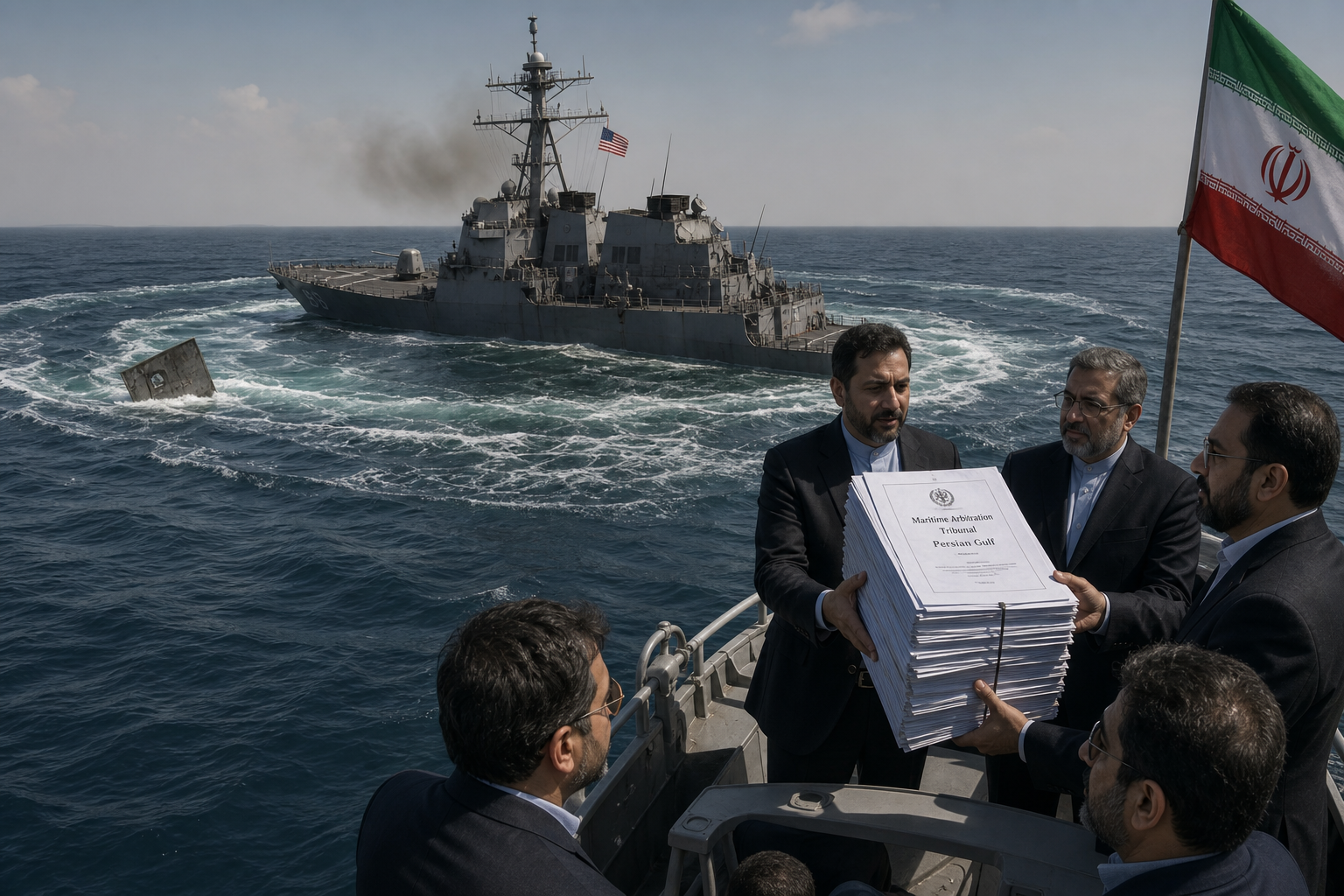
WASHINGTON—Officials at Iran’s Ministry of Foreign Affairs confirmed Wednesday that they transmitted a 43-page preliminary assessment of the American 17-point Maritime Stability Framework to Pakistani mediators, requesting 11 additional working days of interagency analysis before issuing counterproposals.
The document arrived 19 hours after an F/A-18 Super Hornet from the USS Abraham Lincoln fired 312 rounds of 20-millimeter ammunition into the rudder of the Iranian-flagged tanker Hasna for crossing the northern edge of the U.S.-enforced Blockade Adjustment Zone. U.S. Central Command called the strike a routine enforcement measure under Paragraph 7.2 of the Port Denial Modernization Initiative.
President Trump, speaking between slices of angel food cake at the White House Mother’s Day reception, deemed the Iranian review “very serious” and “very smart.” “They want this deal very badly,” he said. “Nobody wants nuclear weapons except bad people, and we are not letting that happen while these reviews are happening.”
The pause in convoy protection operations for commercial vessels in the Strait of Hormuz counts as a temporary adjustment under Section 4 of the Coercive Diplomacy Calibration Order of 2025. The Abraham Lincoln has redirected its aircraft to meet the tanker interdiction quota of 3.2 vessels per calendar week.
State Department Deputy Assistant Secretary for Iran Review Monitoring Harlan J. Whitaker called the submission “measurable movement” on the department’s Negotiation Leverage Dashboard. “Each additional page correlates with a 4.7 percent uptick in compliance pressure on their petroleum logistics chain,” he noted.
A 2024 study by the Center for Gulf Economic Denial Metrics found that nations subject to 28 days or more of proposal review suffer an average 61 percent contraction in monthly oil export volumes.
Iranian spokesman Esmail Baghaei said his government would cross-reference the framework against damage reports from the Hasna, which remains adrift 41 nautical miles southeast of Bandar Abbas with 2.8 million barrels of crude still aboard.
The U.S. Navy’s Blockade Dashboard posted a 92 percent effectiveness rating this quarter. Logisticians have already begun modeling Phase IV scenarios that extend Iranian review periods by 21 days in exchange for strikes on secondary infrastructure at Chabahar.
Trump added that he expected Iran’s full counterproposal “probably sometime after the next couple of ships learn not to test us.” The Maritime Stability Framework contains no provision for lifting the blockade until Tehran accepts permanent third-party monitoring of its refinery throughput data by a consortium led by ExxonMobil and Raytheon.