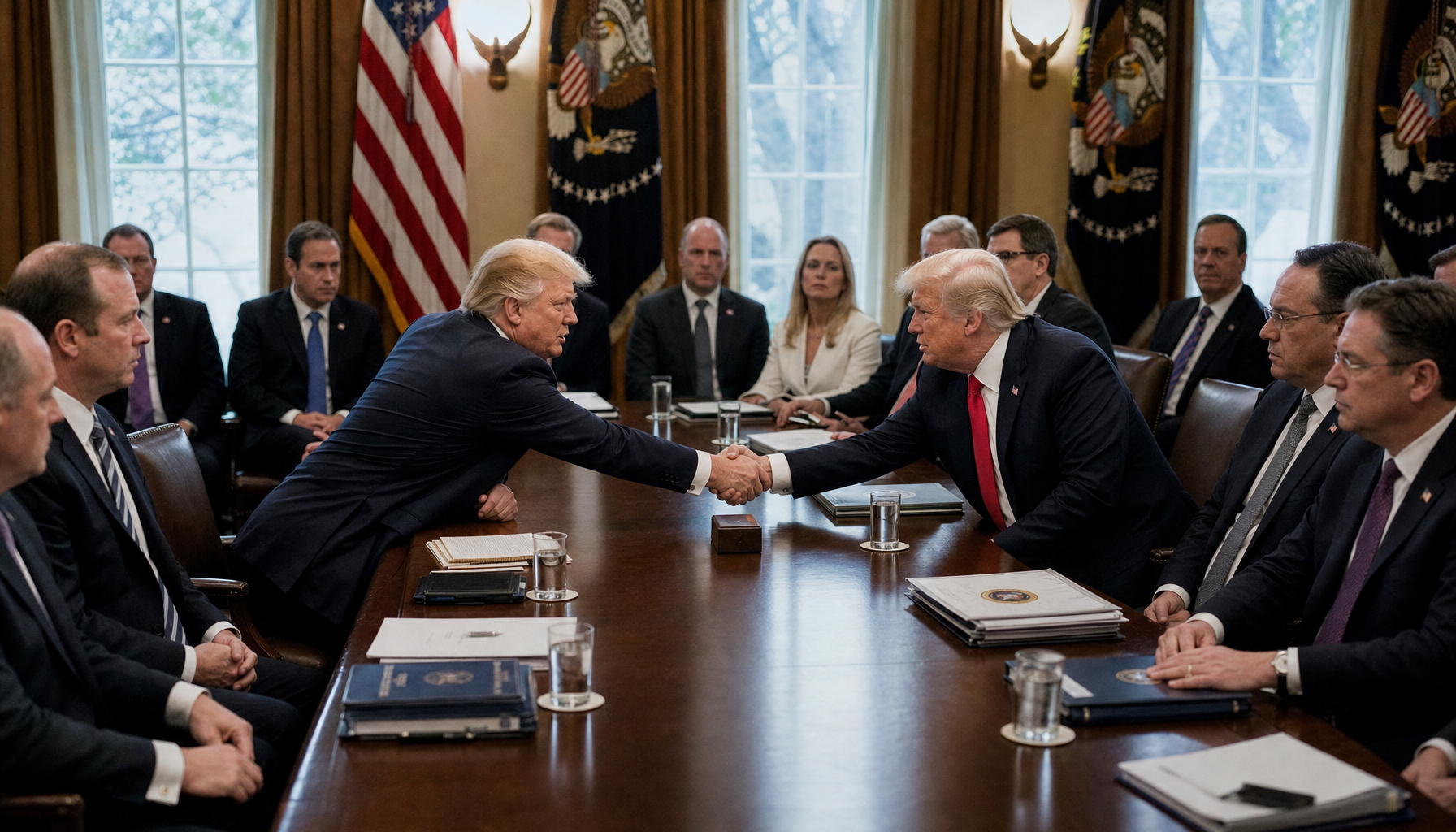
WASHINGTON — President Trump reached an amicable resolution with himself Monday, dropping a $10 billion lawsuit against the IRS after his own administration agreed to create a $1.8 billion fund to support his political allies.
The deal was conceived on a flight to Mar-a-Lago in January, when the president remarked that he was “supposed to work out a settlement with myself.” According to officials familiar with the talks, Trump proved a tough negotiator on both sides of the mirror.
In a terse addendum Tuesday, acting Attorney General Todd Blanche, Trump’s former personal lawyer, declared that the United States government is “forever barred and precluded” from pursuing any claims against the president involving “lawfare and/or weaponization” or his tax returns.
“This is straightforward,” Blanche said. “The president sued the government. The president also runs the government. The government has now paid the president’s friends $1.8 billion so the president will stop suing himself. Everyone wins except the Constitution.”
Legal scholars described the arrangement as a novel use of a congressional mechanism previously thought to be resistant to outright self-dealing.
“The founding fathers did anticipate many forms of corruption,” said constitutional expert Jonathan Turley, “but they apparently never considered the president simply cutting himself a check while serving as his own adversary.”
The deal also revives long-debated questions about whether a president can pardon himself. A 1974 Justice Department opinion had concluded that no one may be a judge in his own case. That memo has not been formally withdrawn, though Trump reportedly plans to negotiate its withdrawal with himself next week.
Kicker: White House officials say the president intends to file a new $15 billion suit against himself in early April to keep the settlement pipeline open.